British and Ukrainian Theologians Commemorated Moltmann’s Centenary
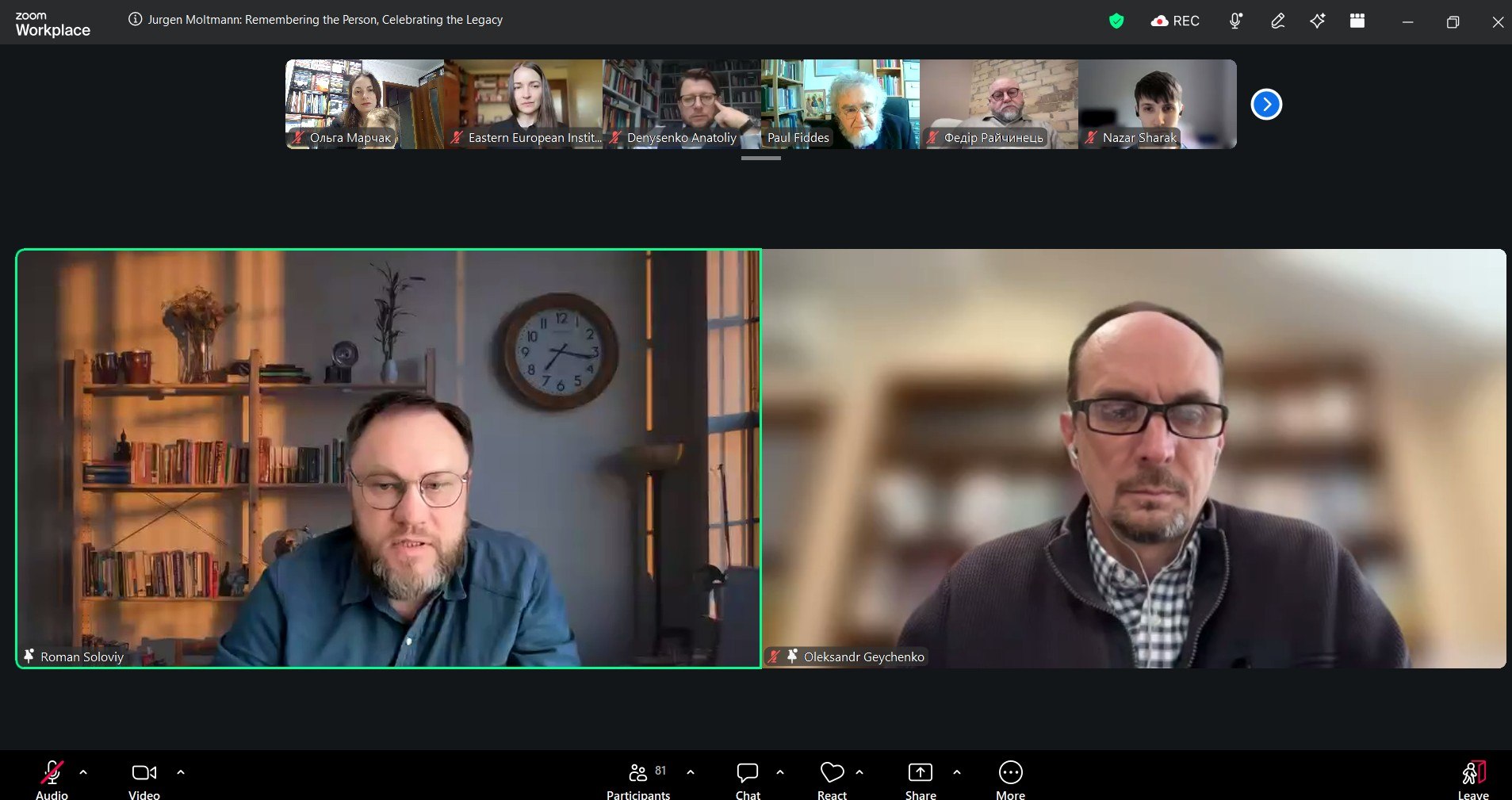
To commemorate the 100th anniversary of Jürgen Moltmann’s birth (April 8, 1926), the Eastern European Institute of Theology (EEIT) and the Odessa Theological Seminary (OTS) co-hosted an international online seminar titled “Jürgen Moltmann: Remembering the Person, Celebrating the Legacy,” honoring the German theologian’s memory and examining the relevance of his thought for the church and for a country living under conditions of war.
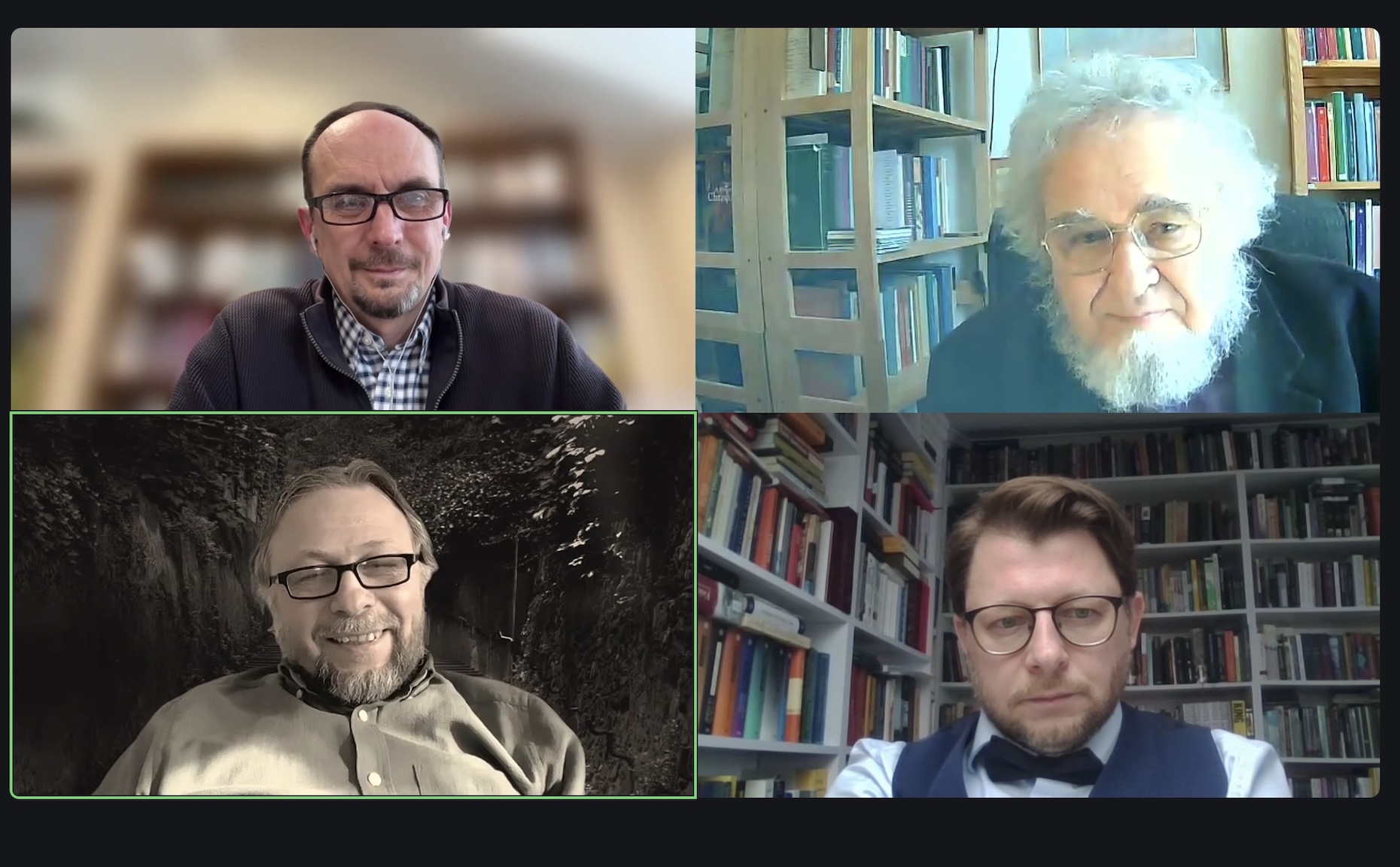
The seminar, held on April 23, 2026, and moderated by Oleksandr Heychenko, Rector of OTS, brought together theologians from the United Kingdom and Ukraine. The organizers described it as the largest event dedicated to Moltmann’s work since the beginning of the full-scale Russian invasion in February 2022. Simultaneous interpretation into Ukrainian was provided throughout the event.
This seminar demonstrated that, on the 1,520th day of Russia’s full-scale war against Ukraine, the community of Ukrainian theologians and seminary faculty continues to serve the local church – training a new generation of pastors, chaplains, and theological leaders amid shelling and air raid sirens – while also learning to serve the global church by reflecting on the hard-won experience of theological work in wartime conditions.
This dual calling was clearly reflected in the audience's diversity: the seminar brought together nearly 100 participants from 36 countries across five continents. The largest group of participants were from Ukraine, as well as from Austria, Australia, Belarus, Belgium, Cameroon, Canada, Côte d’Ivoire, Croatia, Cyprus, Estonia, Ethiopia, Germany, Ghana, Hungary, India, Indonesia, Kazakhstan, Kenya, Lebanon, Liberia, Mali, Mexico, Moldova, the Netherlands, Nigeria, North Macedonia, the Philippines, Romania, South Africa, Spain, Sweden, Taiwan, Tanzania, the United Kingdom, and the United States
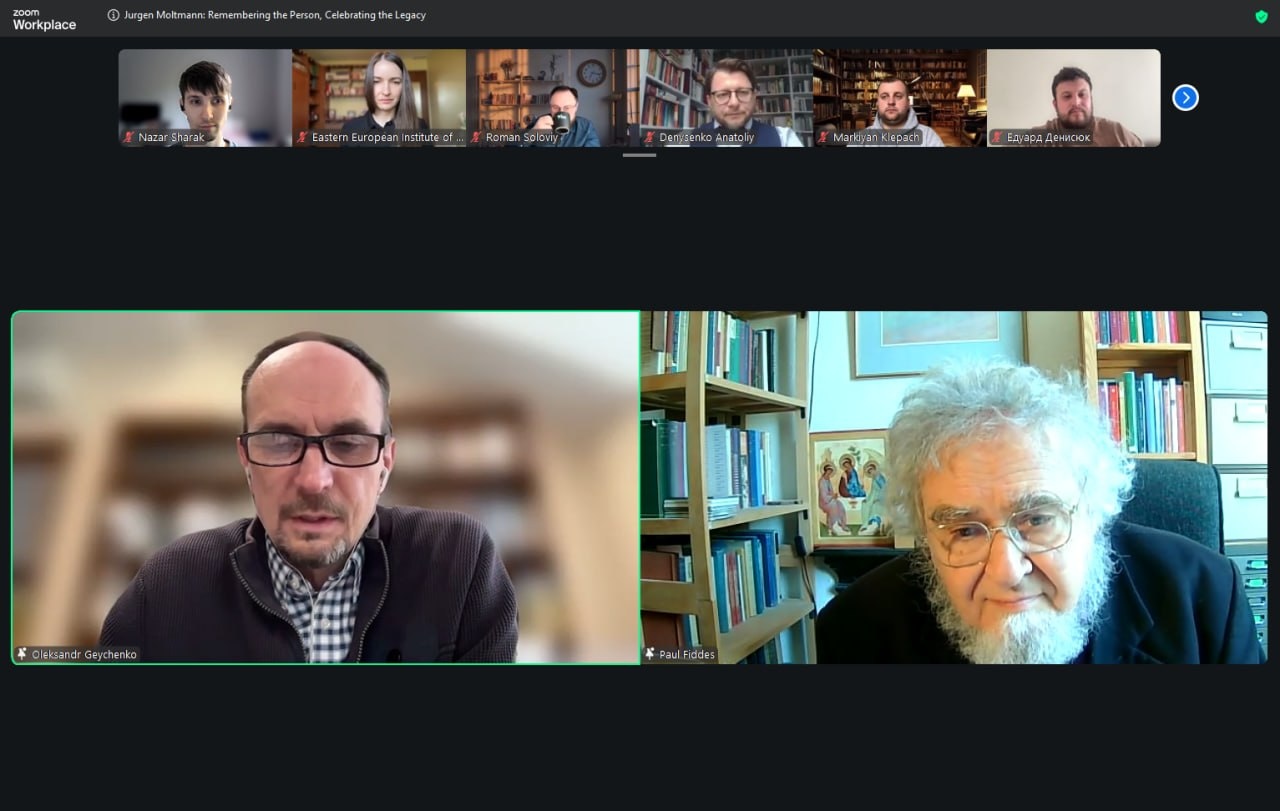
The keynote lecture, “Jürgen Moltmann: A Leader for Our Time,” was delivered by Professor Paul S. Fiddes, Professor of Systematic Theology at the University of Oxford and Senior Research Fellow of Regent’s Park College; a theologian who pursued post-doctoral studies under Moltmann in Tübingen in the 1970s and whose “Creative Suffering of God” (1988) remains a significant interlocutor with Moltmann’s project.
Fiddes traced Moltmann’s intellectual arc from the flak battery in Hamburg in July 1943, through the Norton Camp POW experience near Nottingham, to the publication of “Theology of Hope” (1964), “The Crucified God “(1972), “The Trinity and the Kingdom of God” (1980), and “The Coming of God” (1996).
Particular attention was given to an analysis of Moltmann’s Trinitarian theology, his critique of political monotheism, his doctrine of the millennium, and his universal eschatology of joy. At the same time, the speaker offered a number of critical remarks – particularly regarding certain aspects of Moltmann’s social Trinitarianism and his understanding of eternity.
Two Ukrainian theologians continued the discussion.
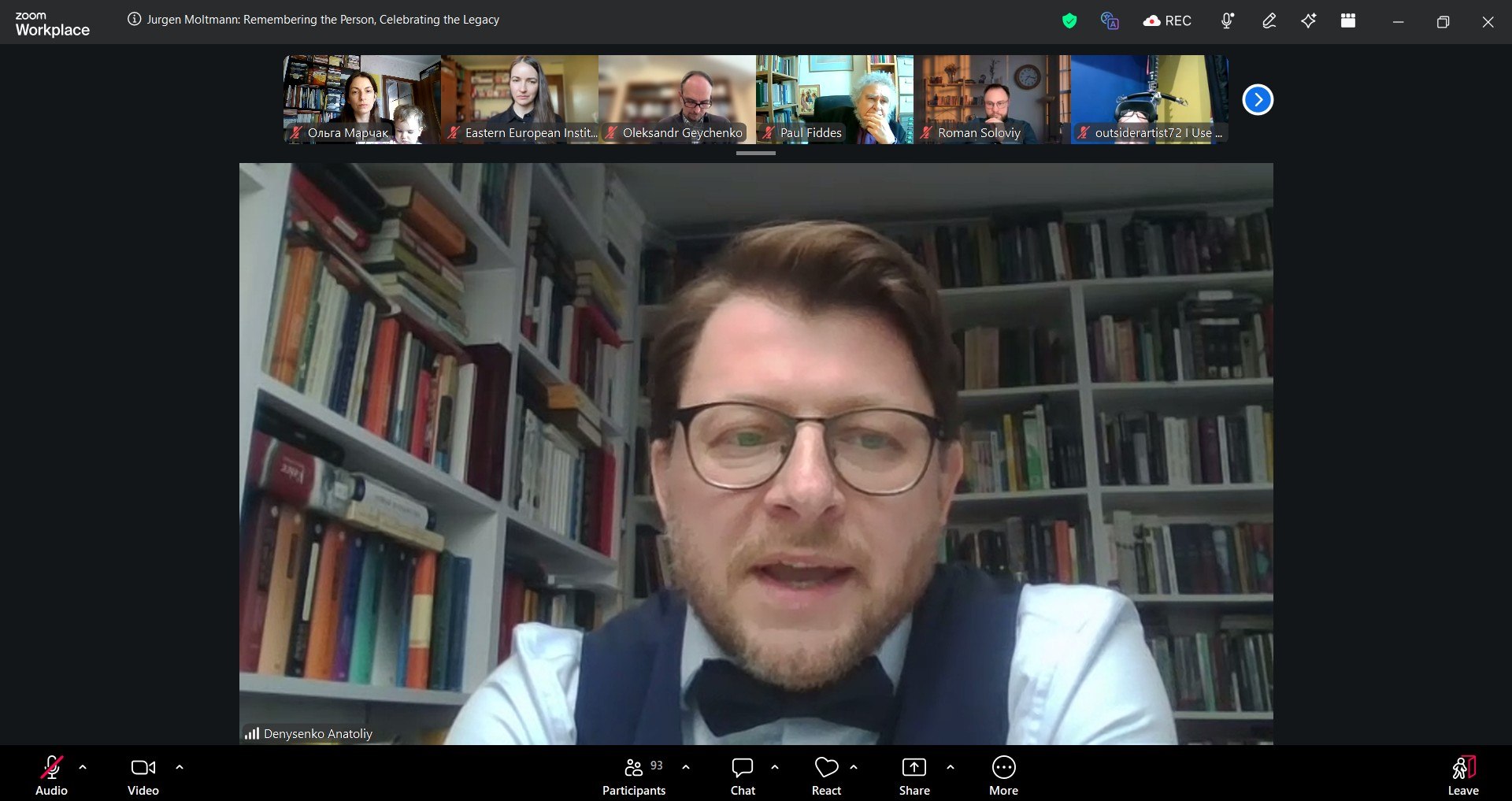
Dr. Anatoliy Denysenko, research fellow at the Eastern European Institute of Theology, presented “The Theology of the Cross of Jürgen Moltmann in the Ukrainian Context,” interpreting Moltmann’s project through the lenses of provocative anamnesis (Moltmann) and dangerous memory (Johann Baptist Metz).
Denysenko argued that Moltmann’s theology is inseparable from his biography – the 1943 firestorm over Hamburg, the photographs of Bergen-Belsen shown to German POWs in 1945, and his prolonged confrontation with Auschwitz – and that the central question of The Crucified God is not the abstract theodicy, “Why does God permit suffering?” but the wartime cry, “My God, where are you?”
Drawing on the thought of Dostoevsky, Camus, and Elie Wiesel, Denysenko argued that Moltmann reinterprets classical theodicy by replacing it with a “dialectic of love”: God does not justify suffering but enters into it; He is present in the experience of abandonment precisely as the Crucified One.
He concluded with a clear call to action: Ukrainian theology must develop its own discipline of dangerous memory – a theology that refuses to treat the deaths of soldiers, children, and civilians as abstract examples of evil, and instead insists on naming, remembering, and honoring each life lost since 2014.
Taras Dyatlik, VSI engagement director for Scholar Leaders in Eastern Europe and a theological education consultant with Mesa Global, delivered a response titled “On the Centennial of Jürgen Moltmann’s Birthday: A Theological Reflection amid the 1,520th Day of Russian Aggression against Ukraine.”
Speaking on the 1,520th day of the full-scale Russian invasion, and from a family in which five siblings, cousins, and nephews have been killed by Russian forces since 2022 – including his brother Andriy, an army medic who was fatally wounded by a Russian drone on July 6, 2024 – with another six relatives currently serving on the front line, Taras offered what he described as “not a student’s response to a professor, but a fellow prisoner’s response, from another captivity.”
His three-part argument defended Moltmann’s often-dismissed doctrine of the millennium as “the most morally serious move in twentieth-century theology,” and as precisely what Ukrainian theology has been waiting for. He insisted that God’s justice must be realized on the very earth where injustice occurred: “on the soil where Bucha lies, and Izium, and Olenivka, and Mariupol.”
Referring to Moltmann’s critique of political monotheism, he applied it as a direct theological lens for analyzing the ideology of the “Russian World,” describing it as a system governed by the logic of “one God on one throne, one patriarch, one emperor, one canonical territory, one holy people.” It is on this theological premise, he argued, that “the Moscow empire still stands – and still shells, and still blesses the shelling.”
At the same time, he proposed supplementing Moltmann’s pastoral theology of presence with the biblical language of judgment and lament, drawing especially on Psalms 137 and 109, the Book of Habakkuk, and Revelation 6:10. In his view, the command in Matthew 5:44 to love one’s enemies does not cancel out the cry of the martyrs: “How long, O Lord?”
During the presentation, references were also made to three recent books – published in collaboration with the British publisher Langham, the Ukrainian publisher “Dukh i Litera,” and the Eastern European Institute of Theology – as real examples of what was described as “theology written under fire, not after it”: Light in the Valley of the Shadow of Death: Stories of Ukrainian Christians During the War (2025), Beatitudes and Terror: A Ukrainian Theological Response to Russian Aggression (2025), and the forthcoming Pastoral Ministry During War: The Ukrainian Experience (2027).
The seminar concluded with an image from April 2022 – tulips sprouting through the ruins of Borodyanka – which was then symbolically applied to Moltmann himself: “His theology did not choose Ukraine. It was written in German, in Tübingen, about Auschwitz and Hiroshima… And yet it blossomed here – in our ruins.”
On behalf of the participants, we would like to express our sincere gratitude to Kseniia Trofymchuk and Roman Soloviy, whose joint efforts in organizing the event were essential to its realization. Their work stands as a quiet but meaningful expression of the conviction that shaped the seminar as a whole.
Moltmann once wrote that there would be no honest “theology after Auschwitz” without “theology in Auschwitz.” Ukrainian theological educators, on the 1,520th day of Russia’s ongoing war of terror against their country, express a similar conviction in their own terms: there will be no honest theology after Ukraine unless theology is being done in Ukraine now – in seminaries and theological programs, in basements, at funerals, and in ministry to refugees and internally displaced persons, as well as to the families of veterans, the fallen, the missing, and those in Russian captivity.
Supporting the formation of theological leaders during the war is not a luxury to be postponed until peace arrives; it is the very condition for any post-war theology to be possible at all.
Taras Dyatlik on behalf of the organizers.